
Native to Search Arbitrage: How to Profit from Traffic Monetization in 2026

Native-to-Search-Arbitrage-Profitable-Traffic-Monetization

I remember the first time someone explained native to search arbitrage to me. It sounded almost too simple: buy traffic cheap, monetize it through search feeds, pocket the difference. But like most things in digital marketing, the devil’s in the details.

After running thousands of campaigns and testing different approaches, I’ve learned what actually works. This guide covers everything you need to know about native to search arbitrage and how to build profitable campaigns that scale.

Understanding Native to Search Arbitrage

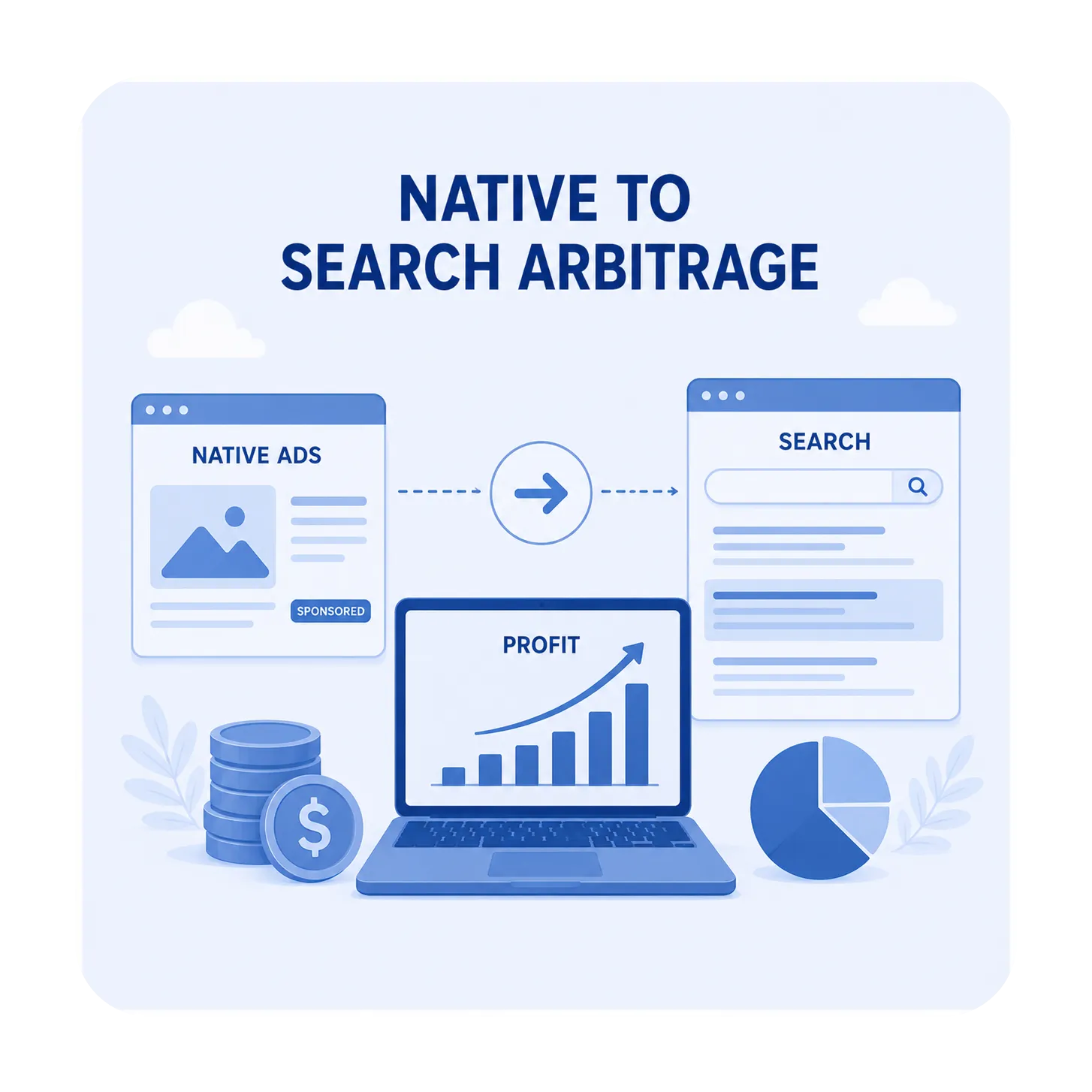
Native to search arbitrage is a traffic monetization strategy where you purchase clicks from native advertising platforms and redirect them to monetized search result pages. When the revenue you earn from search clicks exceeds what you paid for the traffic, you profit.

Here’s the basic flow:

You create native ads that blend naturally into content feeds and news sites
Users click your ads and land on a page you control
That page displays search results powered by search feed providers
When users click those search ads, you earn revenue
The difference between your traffic cost and search revenue is your profit

The margins might seem thin at first glance, often 10-25% per click. But when you’re processing thousands of clicks daily, those pennies add up quickly.

Native to Search Arbitrage Infographic

Native to Search Arbitrage

1
Create native ads
2
Users click → land on your page
3
They see search results
4
They click search ads = you earn
PROFIT = Revenue − Cost
10-25% Margins
1000s Daily Clicks

Why This Model Works

Native advertising has a unique advantage over other traffic sources. Research shows native ads are 31% more trustworthy than social media ads, generate 16% more clicks, and produce 18% more purchases.

The reason is native ads don’t interrupt. They blend seamlessly with the content people are already reading. When someone’s browsing news articles or entertainment content, native ads feel like natural recommendations rather than obvious advertisements.

This trust factor translates directly to higher-quality traffic. Users who click native ads are genuinely interested in the content, which means they’re more likely to engage with search results and click through to advertisers.

The Two Campaign Structures

When building your native to search campaigns, you’ll choose between two flow structures:

Direct Flow (1-Click)

User clicks your native ad and lands directly on the search results page.

This approach is simpler to set up and has fewer technical requirements. However, it can appear spammy and typically generates lower earnings per click because users haven’t been warmed up to the content.

Bridge Page Flow (2-Click)

User clicks your native ad, lands on an intermediate content page, then proceeds to search results.

This is my preferred approach. The bridge page builds trust, provides context, and increases user engagement. Search feed providers recognize this higher engagement and typically reward it with better earnings per click.

The bridge page can be a simple article, quiz, comparison tool, or informational content related to your niche. The key is making it valuable enough that users feel they got something useful, even before they see search results.

Flow Comparison Infographic

2 Campaign Flow Structures

1-Click Flow
Native Ad
Search Results
✓ Pros: Simple setup, fewer requirements

✗ Cons: Can appear spammy, lower EPC
Bridge pages = articles, quizzes, comparison tools that warm up users before search results

Where Reacheffect Fits In

Running successful native to search arbitrage campaigns requires managing multiple moving parts: buying traffic, tracking costs, monitoring revenue, optimizing performance, and scaling winners.

This is where Reacheffect becomes essential.

Reacheffect is a comprehensive advertising platform designed specifically for performance marketers. Unlike basic ad networks, Reacheffect provides everything you need to run profitable arbitrage campaigns in one place.

What Makes Reacheffect Different

Native Traffic at Scale
Reacheffect offers high-volume native advertising through premium publisher networks. You get access to billions of monthly impressions across 250+ countries, with traffic from verified sites and apps.

Real-Time Campaign Tracking
The platform includes advanced conversion tracking tools that let you monitor your results and ROI in real-time. You can see exactly which campaigns are profitable down to the placement level.

Flexible Pricing Models
Choose between CPC, CPM, CPA, or CPL pricing depending on your campaign goals. This flexibility lets you optimize spending based on what works best for each vertical.

Advanced Targeting Options
Reacheffect provides precise targeting by geography, language, operating system, browser, device type, and specific sites. This level of control helps you reach the exact audience most likely to convert.

Multiple Ad Formats
Beyond native ads, you have access to push notifications, pop ads, and banner formats. This variety lets you test different approaches and find what generates the best ROI for your offers.

24/7 Support
The platform offers round-the-clock support from experienced account managers who understand performance marketing. They can help optimize your campaigns and suggest strategies based on what’s working across the network.

Easy Integration
Getting started is straightforward with simple setup processes and clear documentation. You can launch your first campaign within hours rather than days.

Advertise With The Reacheffect Ad Network

Get Traffic

Profitable Niches for Native to Search Arbitrage

Not every niche works well with this model. You need topics where search advertisers pay premium prices for clicks, which translates to higher earnings for you.

Finance & Insurance

  • Auto insurance quotes
  • Credit card comparisons
  • Personal loans
  • Mortgage refinancing

Health & Medical

  • Medicare plans
  • Dental services
  • Health insurance
  • Treatment options

Home Services

  • Solar installation
  • HVAC repair
  • Roofing contractors
  • Security systems

Legal Services

  • Personal injury lawyers
  • Bankruptcy attorneys
  • Divorce lawyers

Technology

  • Antivirus software
  • VPN services
  • Web hosting

These verticals consistently perform because advertisers pay significant amounts for qualified leads. When search advertisers pay more per click, your earnings per click increases proportionally.

Optimization Strategies That Work

Once campaigns are running, optimization separates winners from losers.

Start Broad, Then Narrow

Begin with wide targeting to gather data. After collecting enough clicks (usually 500-1000), analyze which segments perform best and focus your budget there.

Cut Underperformers Fast

If a placement, device type, or geographic area shows consistently negative ROI after reasonable testing, blacklist it. Don’t keep feeding money into losing traffic sources.

Test Multiple Creatives

Run at least 5-10 ad variations simultaneously. Different headlines and images perform drastically differently. What works in one GEO might fail in another.

Adjust Bids Strategically

Use Reacheffect’s bidding tools to increase bids on profitable segments and decrease bids on marginal ones. Small bid adjustments can shift campaigns from negative to positive ROI.

Account for Revenue Delays

Search feed revenue typically confirms 24-48 hours after the click. Don’t make optimization decisions based on incomplete data. Wait for full revenue confirmation before judging campaign performance.

Getting Started: Your Action Plan

Ready to start with native to search arbitrage? Here’s your roadmap:

Week 1-2: Foundation

  • Sign up for Reacheffect
  • Choose 2-3 profitable niches to test
  • Research search feed providers in your chosen verticals
  • Set up tracking and prepare your first campaigns

Week 3-4: Initial Testing

  • Launch 3-5 small campaigns ($20-50 daily budget each)
  • Create 5-10 ad variations per campaign
  • Build or source quality bridge pages for 2-click flow
  • Monitor metrics daily and gather data

Week 5-6: Optimization

  • Analyze performance data from your tests
  • Identify winning combinations of GEO, device, and creative
  • Blacklist poor performers
  • Scale daily budgets on profitable campaigns by 10-20%

Week 7+: Scaling

  • Expand successful campaigns to new GEOs
  • Test additional creatives and landing pages
  • Add new verticals based on what’s working
  • Use Reacheffect’s optimization tools to refine targeting

The Reality of Native to Search Arbitrage

I’ll be straight with you. This isn’t passive income. It’s a real business that requires:

  • Capital investment ($1,000-$5,000 minimum for testing)
  • Daily monitoring and optimization
  • Learning curve navigation
  • Patience during testing phases
  • Consistent effort to stay profitable

But for marketers who commit to the process, the rewards are substantial. The model scales predictably, doesn’t require product creation or customer service, and can generate consistent revenue once you’ve identified winning campaigns.

The key is using the right tools from the start.

Native advertising continues growing in 2026, with less saturation than social media channels and better user trust. Combined with solid search feed monetization, you have a proven model for building profitable traffic arbitrage campaigns.

The question is: are you ready to test it yourself?

Picture of Avi<br><span>Writer for ReachEffect</span>
Avi
Writer for ReachEffect

Share

Related Posts

Frequently Asked Questions