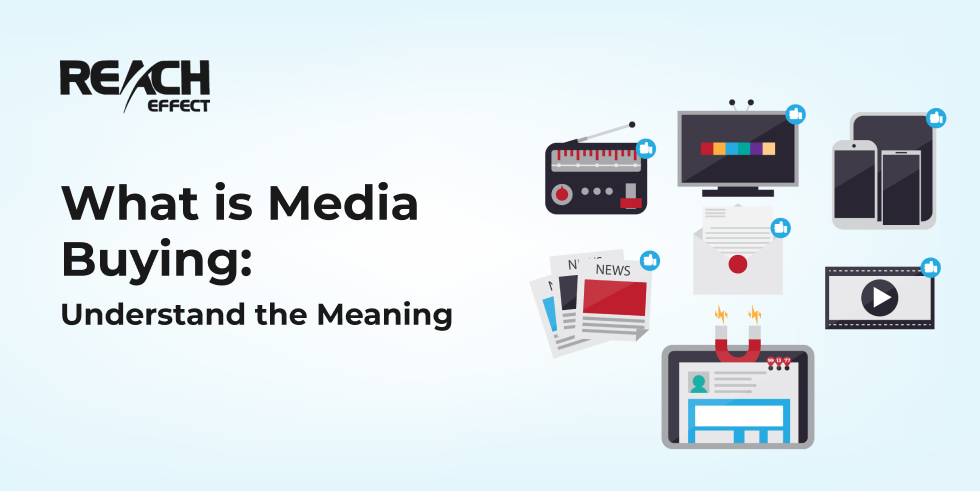
Media buying isn’t about clicking “boost post” and hoping for magic. It’s a sophisticated discipline where data science meets audience psychology. It’s executed through platforms processing billions of micro-decisions per day.
The Reality Check: I’ve watched advertisers burn $50,000 learning what professional media buyers know instinctively. This guide breaks down everything that actually matters.
Defining Media Buying: Beyond the Textbook Version
Media buying operates as a strategic acquisition system. You’re not just purchasing ad slots.You’re engineering traffic pathways through algorithmic networks that connect your message to high-probability conversion audiences.
How It Actually Works: Modern platforms aggregate inventory from 10,000+ publishers. Your campaign parameters trigger real-time bidding auctions that execute in 120 milliseconds. Advanced buyers leverage this infrastructure to outmaneuver competitors paying 3x more for identical traffic.
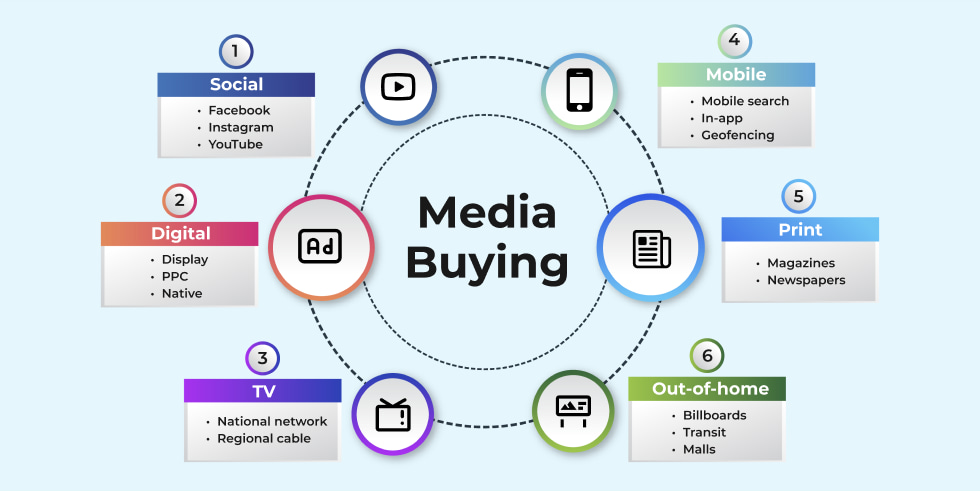
The Three-Layer Framework:
- Inventory Access: Direct publisher relationships, programmatic exchanges, private marketplaces
- Audience Targeting: Behavioral data, demographic filters, contextual placement
- Optimization Systems: Algorithmic bid adjustment, creative rotation, conversion attribution
The Evolution: From Mad Men to Machine Learning
A few years ago traditional media buying meant calling radio stations and negotiating newspaper rates. Digital transformation changed everything.
What Changed in the Last 5 Years:
- Programmatic platforms now control 85% of digital ad inventory
- AI-driven optimization replaced manual campaign management
- Cross-device attribution tracks users across 7+ touchpoints before conversion
- Real-time data feeds enable sub-hour campaign pivots
Why This Matters: A campaign I tested in 2020 required 14 days to gather meaningful performance data. The same campaign structure in 2026 delivers actionable insights within 6 hours.
Media Buying’s Role in Marketing Infrastructure
Strategic media placement controls whether your marketing exists or evaporates into digital noise.
The Brutal Truth: Your competitor with a mediocre product but superior media buying will outsell your superior product with amateur placement. I’ve seen this pattern repeat across 40+ industries.
The Traffic Architecture Components:
Audience Segmentation Systems analyze behavioral clusters through machine learning. These engines process browsing history, purchase patterns, content engagement, and demographic data to build probability models. A fitness app targeting “weight loss seekers” might identify 12 distinct micro-audiences with conversion rates varying from 0.8% to 4.3%.
Channel Selection Matrices evaluate platform performance potential. Not all channels deliver equal results. Pop traffic converts exceptionally for iGaming offers. Push notifications dominate in sweepstakes verticals. Native ads win for content-heavy products. Professional buyers maintain performance databases showing which channels work for specific offer types.
Budget Distribution Algorithms calculate optimal spend allocation. Instead of splitting budgets equally, advanced systems weight allocation toward proven performers while maintaining test budgets for new opportunities. A $10,000 monthly budget might allocate $7,000 to validated channels, $2,000 to scaling tests, and $1,000 to experimental placements.
The Technical Infrastructure Behind Modern Media Buying
Professional media buying operates through sophisticated technology stacks most advertisers never see.
Demand-Side Platforms (DSPs) like Reacheffect provide the buying interface. These systems connect to multiple ad exchanges simultaneously, enabling access to millions of available ad impressions across thousands of websites and apps.
Data Management Platforms (DMPs) aggregate audience intelligence. These systems ingest first-party data (your customer lists), second-party data (partner sharing), and third-party data (commercial audience segments) to build comprehensive user profiles enabling hyper-targeted campaigns.
Attribution Systems track conversion pathways. Modern attribution follows users across devices, platforms, and touchpoints to accurately assign credit for conversions. This intelligence feeds optimization algorithms, continuously improving targeting precision.
Essential Skills for Effective Media Buying
Professional media buyers combine analytical precision with creative problem-solving.
Core Competencies:
Data Analysis Mastery separates professionals from amateurs. You need to interpret attribution data chains, understand statistical significance, identify performance patterns, and translate metrics into actionable decisions. When CTR drops 15% but conversion rate increases 22%, is that good or bad? Professional buyers know instantly.
Platform Expertise requires deep technical knowledge. Each advertising platform operates differently. Facebook’s algorithm rewards engagement. Google prioritizes relevance scores. Pop networks optimize for volume. Push platforms focus on subscriber quality. Professional buyers maintain current expertise across multiple platforms.
Negotiation Skills unlock inventory access and pricing advantages. Strong buyer-publisher relationships provide early access to new inventory, preferential pricing, and custom targeting capabilities unavailable through standard interfaces.
Creative Understanding enables performance optimization. Media buyers who understand what makes creative assets convert can provide actionable feedback to design teams, dramatically improving campaign performance.
Common Media Buying Mistakes (And How to Avoid Them)
Most campaign failures stem from predictable errors.
Mistake #1: Inadequate Conversion Tracking Without proper tracking like the S2S Conversion Tracking from Reacheffect, you’re flying blind. Implement pixel-based tracking, UTM parameters, and conversion attribution before spending significant budget.
Mistake #2: Premature Optimization Algorithms need data to learn. Campaigns optimized before reaching statistical significance (typically 100+ conversions) often optimize toward random noise rather than genuine patterns.
Mistake #3: Channel Mismatch Promoting enterprise B2B software through pop traffic rarely works. Match your offer complexity and price point to appropriate channels.
Mistake #4: Creative Stagnation Ad fatigue destroys performance. Rotate creative assets systematically. Monitor frequency metrics. Refresh messaging every 2-3 weeks.
Mistake #5: Ignoring Negative Signals When placement reports show specific sites or apps underperforming, exclude them immediately. Sophisticated buyers maintain extensive exclusion lists refined over months.
The Future of Media Buying: What’s Changing
Media buying evolves rapidly. Here’s what’s shaping the next 2-3 years.
AI-Driven Campaign Management will automate 70%+ of optimization tasks. Platforms already deploy machine learning for bid optimization. Next-generation systems will handle creative generation, audience discovery, and budget allocation with minimal human input.
Privacy-First Targeting replaces cookie-based tracking. Apple’s ATT framework and Google’s Privacy Sandbox are forcing industry-wide adaptation. Contextual targeting and first-party data strategies become critical.
Cross-Platform Attribution gets more sophisticated. New systems track users across CTV, mobile apps, websites, and physical retail to build complete conversion pathway maps.
Automated Creative Optimization tests thousands of creative variations simultaneously. Dynamic creative platforms generate personalized ad variations for micro-audience segments automatically.
Making Media Buying Work for Your Business
Strategic media buying transforms from cost center to growth engine when executed properly.
The Integration Principle: Media buying doesn’t exist in isolation. It connects to your offer quality, landing page optimization, sales process, and customer retention. Weak links anywhere destroy campaign performance.
Starting Smart: Begin with one well-executed channel. Master its mechanics. Achieve profitability. Then expand methodically. The biggest waste I see is spreading thin across too many platforms without mastering any.
The Reacheffect Advantage: Platforms specializing in performance traffic provide infrastructure purpose-built for conversion optimization. When you’re prioritizing ROI over vanity metrics, specialized networks often outperform general platforms at 40-60% lower costs.
Media buying done right isn’t magic—it’s engineered traffic acquisition. It’s algorithms meeting strategy. It’s data-driven decisions executed through platforms processing billions of micro-transactions daily. Master these fundamentals and you’ll outperform 90% of advertisers still treating media buying as an afterthought.