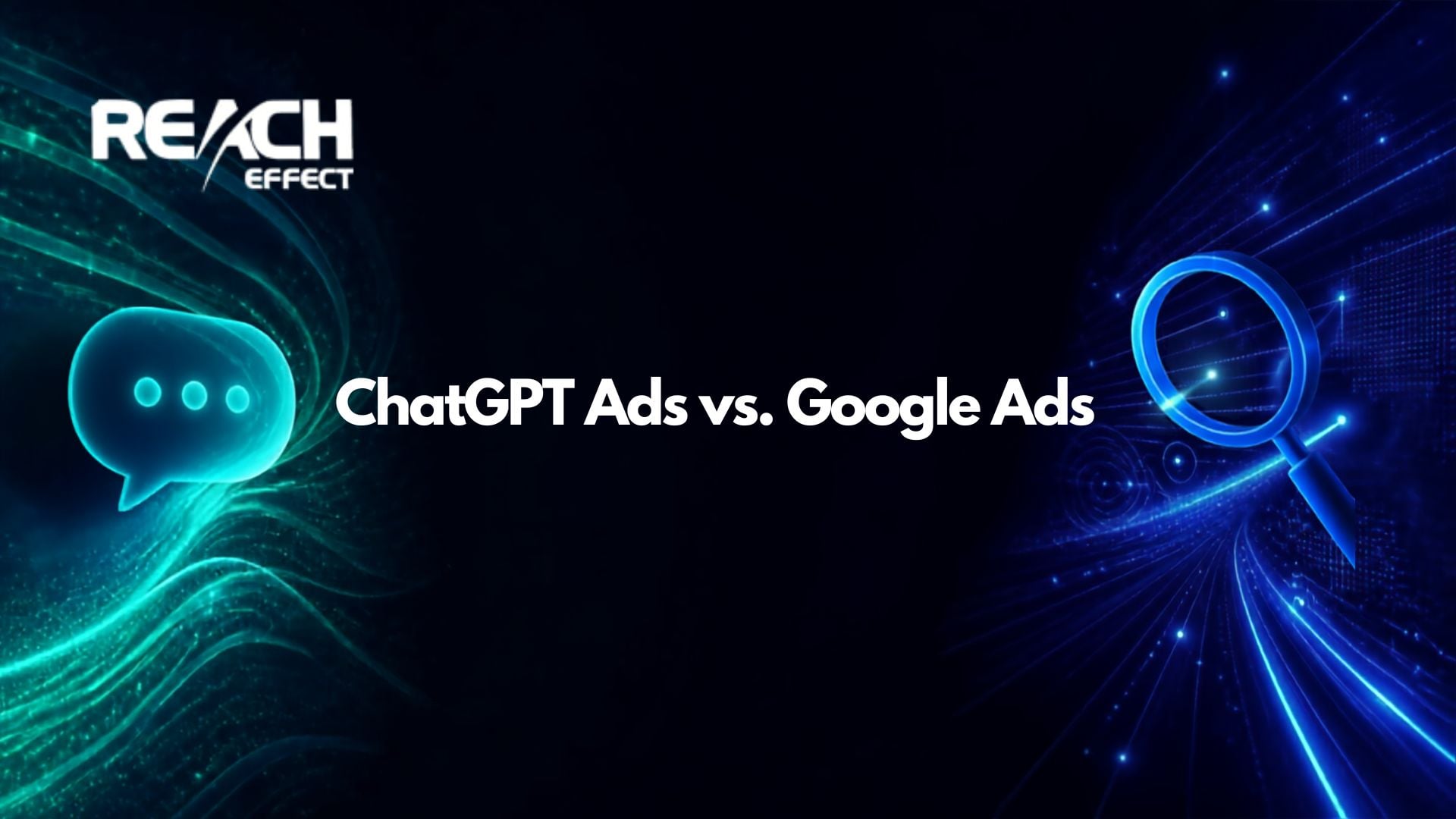


Let’s kill the clickbait take right away: Google Ads isn’t dead. It’s not dying next year either. It’s still one of the biggest online advertising platforms and nothing that happened in 2026 changes that.
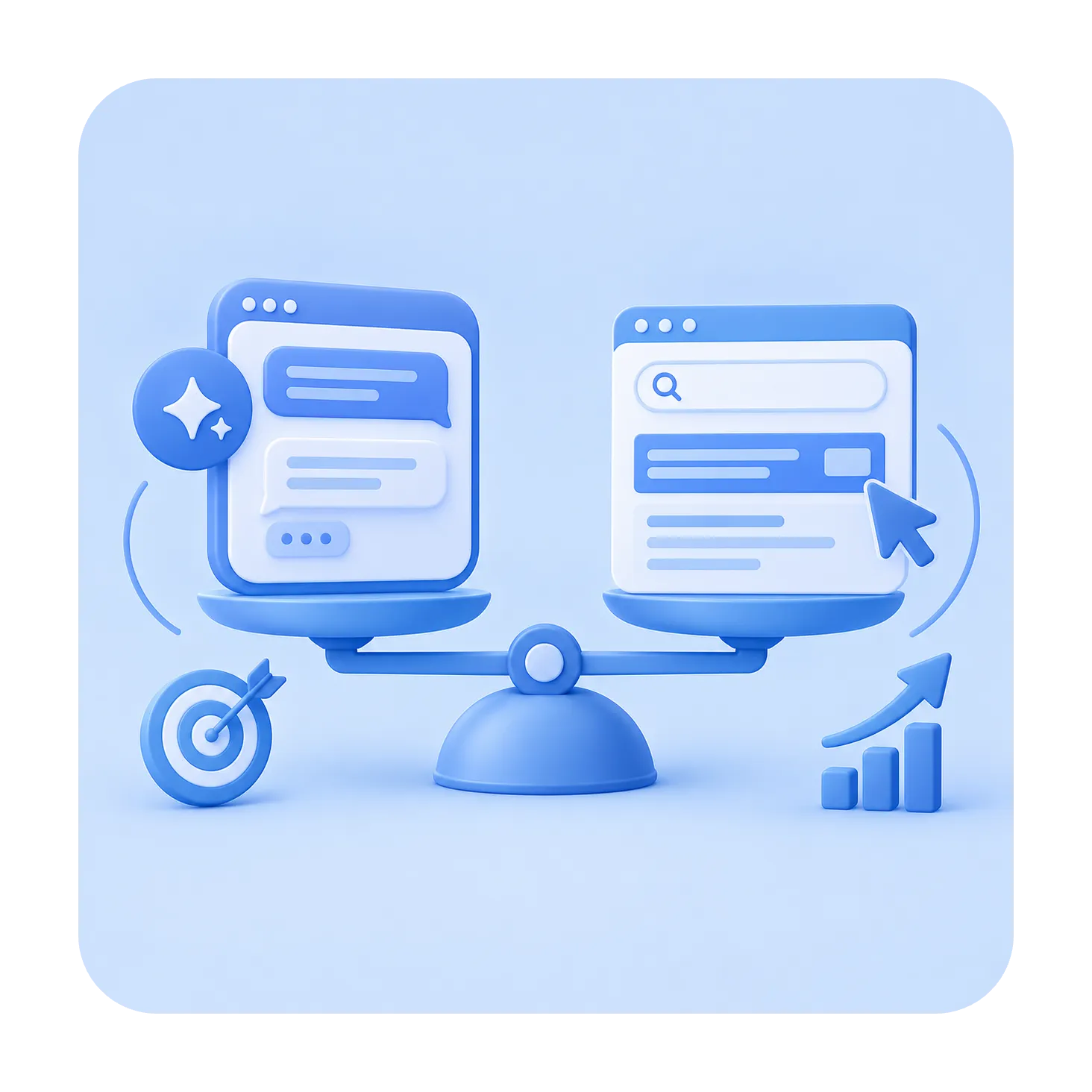
But something is genuinely shifting under the hood of digital advertising, and if you’re still thinking about this as “just another ad platform launched,” you’re missing something important here. The real question isn’t which channel wins. It’s how you split budget across search, AI chat and open-web inventory, whether you’re buying reach on a CPM ad network or paying only for results through a CPA network.
OpenAI didn’t casually test some banner ads and call it a day. It built an actual advertising business inside ChatGPT, opened it to self-serve, and scaled it much faster than almost anyone thought. Sponsored placements that sit alongside an answer work a lot like native ads on the open web, and that’s worth paying attention to.
The Old Funnel vs. The New One
Search advertising has run on one core mechanic for over 20 years:
Query → results → click → website.
You type a few keywords. Google shows you ten blue links, a few ads, maybe a shopping carousel. You click through to a site to actually get what you need — an answer, a comparison, a purchase.
AI chat interfaces are building something different:
Question → conversation → recommendation → action.
You ask a full, natural question. You might go back and forth a few times. You get a synthesized answer, and a brand can show up inside that conversation instead of next to it. The “click” isn’t even always the point anymore, the recommendation itself can be the thing that drives the action.
That’s not a small UX tweak. It’s a completely different relationship between the user, the platform, and the advertiser. And it’s why this deserves more than a shrug.
This Isn’t Speculation Anymore
Here’s the timeline, and it moved a lot faster than most agencies planned for:
| Date | Milestone |
|---|---|
| Feb 9, 2026 | OpenAI launches a US pilot, showing ads to logged-in adult users on Free and ChatGPT Go tiers |
| May 5, 2026 | Self-serve ChatGPT Ads Manager opens to US businesses; the earlier $200,000 minimum spend commitment gets dropped |
| June 2026 | LiveRamp becomes OpenAI’s first independent conversion API partner, letting qualifying brands connect chatbot conversations to real-world purchases |
| Aug 31, 2026 | ChatGPT Ads hits a $1 billion annualized revenue run rate in under 200 days, expanding to India, Europe, the Middle East, and North Africa |
Agency partners already plugged in include Dentsu, Omnicom, Publicis, and WPP. Ad-tech integrations run through Adobe, Criteo, Kargo, Pacvue and StackAdapt.
That’s not a beta test anymore. That’s an ecosystem with real budgets and everything you can think of.
How ChatGPT Ads Actually Work
Before anyone reallocates their entire media budget, here’s what’s actually going on under the hood:
- Placement: Ads show as clearly labeled “Sponsored” listings, visually separated from the model’s actual answer. They sit alongside the response, not embedded inside it.
- Targeting: Matching is based on the current conversation topic, and past chats if a user has personalization turned on. Advertisers never see raw conversation data. OpenAI keeps that on its side.
- Pricing model: A relevance-weighted, second-price auction. Similar in spirit to how Google Ads works, but creative quality can beat out a lower bid.
- Entry cost: Reported early CPCs sit around $3 to $5, with CPMs roughly in the $25 to $60 range.
- Eligibility: Ads only show to Free and Go tier users. Plus, Pro, Business, and Enterprise users see zero ads.
So yes. The inventory is real and growing fast. But it’s also narrower than Google’s for now, both in reach and in the type of intent it captures.
Why Search Advertising Isn’t Going Anywhere
Here’s what a lot of “AI killed Google” hot takes conveniently skip: search and conversational AI aren’t solving the same problem for users.
Search still owns the moment someone already knows exactly what they want and is ready to act. For example queries like “plumber near me,” “buy running shoes size 10,” “flights to Lisbon this weekend.” That’s bottom-funnel, transactional intent, and it monetizes at a level ChatGPT’s ad product isn’t close to touching yet.
Google also isn’t just search ads anymore. Shopping, Maps, YouTube and its entire ad exchange stack all are under one roof. None of that disappears because a chatbot can answer a couple of questions.
What’s actually happening is a new layer forming above search. Call it a discovery and recommendation layer, where people research, compare and get advised before they ever open a search bar.
That’s upper and mid-funnel territory. It doesn’t replace search advertising, it competes for attention earlier in the customer journey. This is before intent has fully transformed into a transaction.
Where This Puts Advertisers
Smart media buyers in 2026 aren’t picking a side between Google Ads and ChatGPT Ads. They’re managing a widening set of channels, each with its own auction logic, creative requirements and measurement quirks.
That’s exactly the kind of environment where having a flexible ad tech partner matters… One that isn’t locked into a single platform… And that can actually run and measure campaigns across multiple exchanges at once.
Reacheffect’s Role
This is the kind of shift Reacheffect exists to help advertisers navigate. We’ve never treated any single network as the whole game. Our model is built around running campaigns across a wide mix of ad exchanges, DSPs, and emerging placements, then optimizing based on what the data actually shows.
As conversational AI platforms open up brand-new ad inventory, the advertisers who come out ahead won’t be the ones who panic and abandon search. They’ll be the ones testing new channels early, with the infrastructure in place to measure performance across all of them side by side. That’s the position Reacheffect is built for.